
1. Einleitung
This manual provides essential information for the installation, operation, and maintenance of your NVIDIA RTX A1000 Professional Graphics Card. Please read this manual thoroughly before installing and using the product to ensure optimal performance and safety.
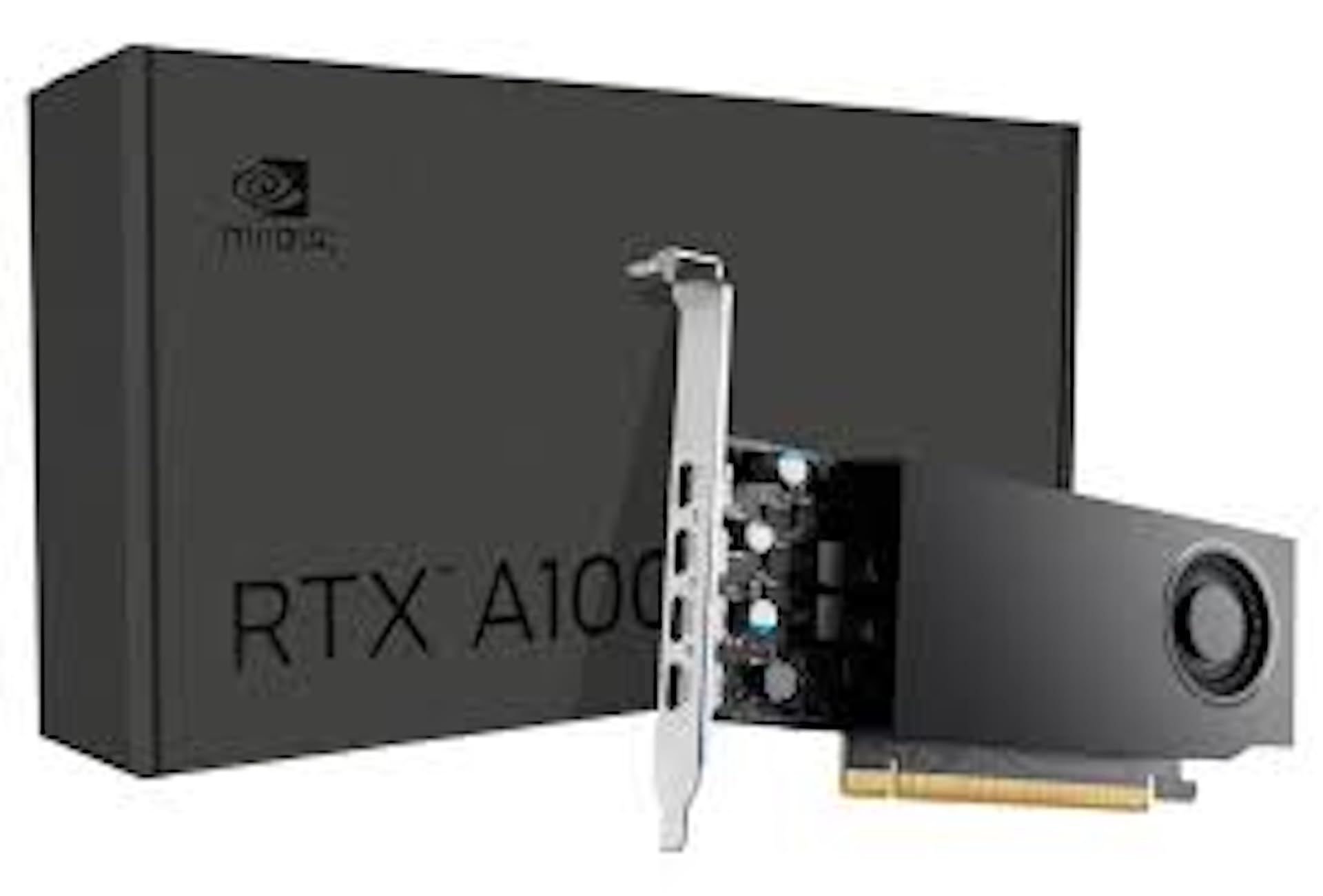
Figure 1: NVIDIA RTX A1000 Professional Graphics Card. This image shows the overall design of the graphics card, highlighting its compact form factor.
2. Produktüberschreitungview
The NVIDIA RTX A1000 is a low-profile graphics processing unit (GPU) designed for professional workstations. It integrates NVIDIA's Ampere GPU architecture, featuring 2,304 CUDA Cores, 72 third-generation Tensor Cores, and 18 second-generation RT Cores, along with 8GB of GDDR6 graphics memory. This card is engineered to enhance visual creation, accelerate AI-powered workflows, and boost productivity within a small-form-factor solution.

Abbildung 2: Schräg view of the NVIDIA RTX A1000. This perspective showcases the cooling fan and the sleek design of the card.
3. Hauptmerkmale
- Advanced Core Architecture: Features 3rd generation Tensor Cores and 2nd generation RT Cores, providing enhanced graphic CAD performance and accelerated rendering and AI generation capabilities compared to previous models.
- Real-time Ray Tracing: Delivers up to twice the real-time ray-tracing performance of previous generations, facilitating complex 3D model processing and realistic image rendering.
- KI-Leistung: Offers up to 3.6 times higher generative AI performance, enabling rapid creation of high-quality images, videos, and 3D assets.
- Unterstützung mehrerer Displays: Equipped with four Mini DisplayPort connectors, supporting multi-application workflows and up to two 8K displays simultaneously for increased productivity.
- 8 GB GDDR6-Speicher: Bietet ample memory for demanding professional applications and complex datasets.
- Low-Profile, Single-Slot Design: Optimizes space within workstations, making it suitable for a wide range of system configurations.
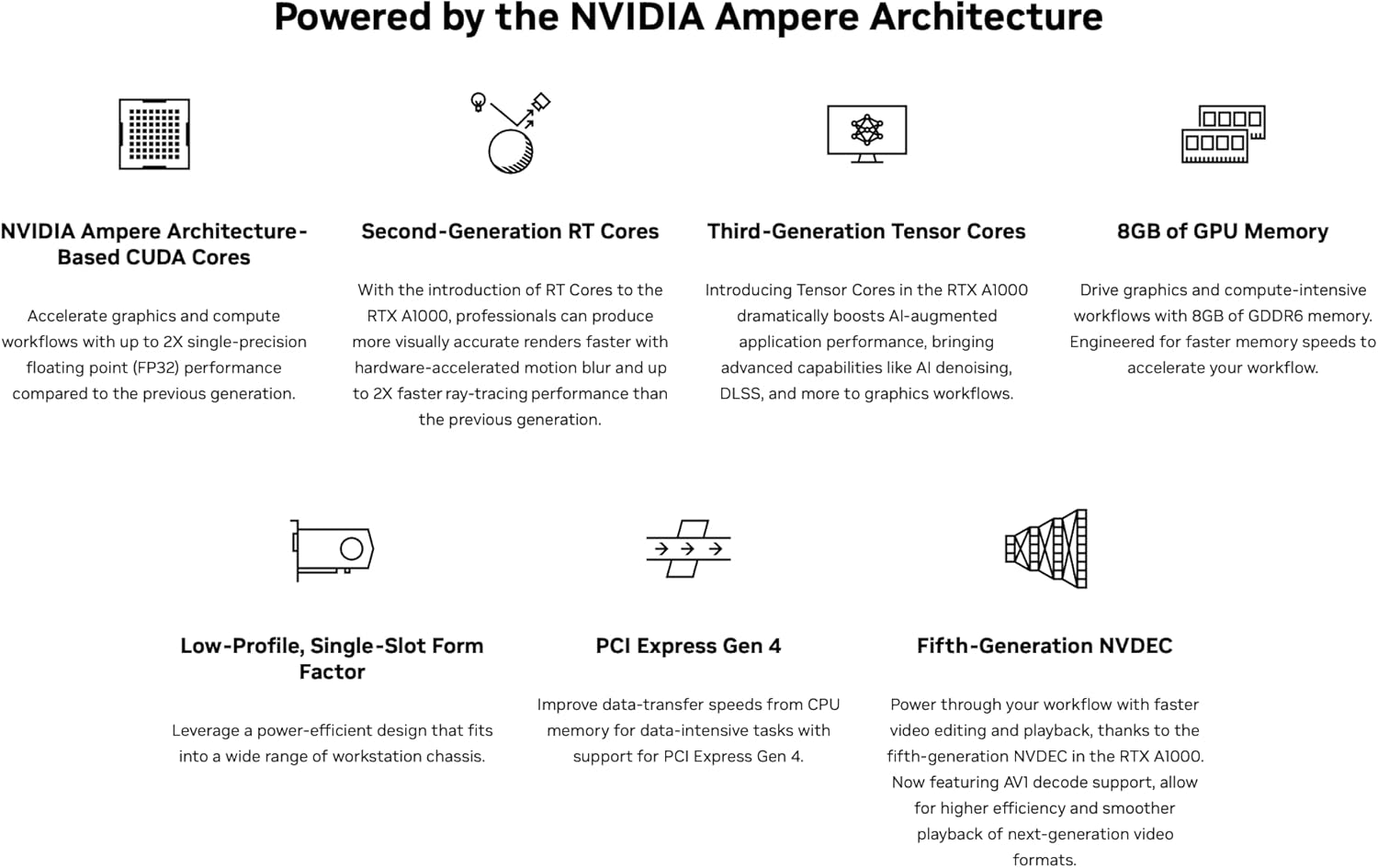
Abbildung 3: Überview of NVIDIA Ampere Architecture features. This graphic details the core components like CUDA Cores, RT Cores, Tensor Cores, and memory, which power the RTX A1000.

Abbildung 4: Bspamples of professional workloads supported by the NVIDIA RTX A1000. This image illustrates applications in design, digital content creation, generative AI, productivity, edge computing, and multi-display environments.
4. Installation und Einrichtung
4.1. Systemanforderungen
- Available PCI-Express x8 or x16 slot.
- Compatible operating system (Windows 10/11 64-bit, Linux 64-bit).
- Sufficient power supply unit (PSU) with adequate wattage (typically 300W or higher recommended for system stability, as the card itself draws 50W).
- Minimum 8GB system RAM.
4.2. Hardware-Installation
- Ausschalten und trennen: Stellen Sie sicher, dass Ihr Computer vollständig ausgeschaltet und vom Stromnetz getrennt ist.
- Computergehäuse öffnen: Entfernen Sie die Seitenwand Ihres Computergehäuses, um auf die Hauptplatine zuzugreifen.
- PCIe-Steckplatz finden: Identify an available PCI-Express x8 or x16 slot on your motherboard. Remove any slot covers if necessary.
- Grafikkarte einlegen: Carefully align the NVIDIA RTX A1000 card with the chosen PCIe slot and press down firmly until it is securely seated. Ensure the retention clip clicks into place.
- Sichere Karte: Use a screw or the case's retention mechanism to secure the graphics card to the computer case.
- Fall schließen und Verbindung wiederherstellen: Replace the computer case side panel, reconnect all cables, and plug the power cord back into the wall outlet.
4.3. Treiberinstallation
- Computer einschalten: Turn on your computer. The operating system may automatically detect new hardware.
- Treiber herunterladen: Besuchen Sie die offizielle NVIDIA-Website. webSeite? ˅ (www.nvidia.com/drivers) to download the latest professional drivers for the RTX A1000. Select your operating system and product series.
- Treiber installieren: Run the downloaded driver installer and follow the on-screen instructions. A system restart may be required to complete the installation.
- Installation überprüfen: After restarting, open NVIDIA Control Panel or NVIDIA Settings to verify that the graphics card is recognized and drivers are correctly installed.
5. Bedienung
5.1. Anschließen von Displays
The NVIDIA RTX A1000 features four Mini DisplayPort (mDP) outputs. Use appropriate mDP to DisplayPort, HDMI, or DVI adapters/cables to connect your monitors. Ensure your displays are powered on and set to the correct input source.

Abbildung 5: Nahaufnahme view of the four Mini DisplayPort outputs on the NVIDIA RTX A1000. These ports allow connection to multiple high-resolution displays.
5.2. NVIDIA Control Panel / Settings
The NVIDIA Control Panel (Windows) or NVIDIA Settings (Linux) provides comprehensive options for configuring your graphics card. Here you can adjust display settings, manage 3D application profiles, set up multiple displays, and monitor GPU performance.
- Bildschirmauflösung: Adjust screen resolution and refresh rates.
- Mehrere Anzeigen: Configure display modes (extended desktop, duplicate displays).
- 3D-Einstellungen: Optimize graphics settings for specific applications or global performance.
- GPU-Überwachung: View GPU temperature, clock speeds, and memory usage.
6. Wartung
- Halten Sie die Treiber auf dem neuesten Stand: Überprüfen Sie regelmäßig die NVIDIA-Einstellungen. website for the latest drivers to ensure optimal performance, stability, and access to new features.
- Staubentfernung: Reinigen Sie Lüfter und Kühlkörper der Grafikkarte regelmäßig mit Druckluft von Staub. Stellen Sie sicher, dass der Computer vor der Reinigung ausgeschaltet und vom Stromnetz getrennt ist.
- Sorgen Sie für eine ordnungsgemäße Luftzirkulation: Maintain good airflow within your computer case to prevent overheating. Ensure case fans are functioning correctly and cables are neatly managed.
7. Fehlerbehebung
7.1. Keine Displayausgabe
- Ensure the monitor is powered on and connected to the correct Mini DisplayPort on the graphics card.
- Vergewissern Sie sich, dass die Grafikkarte vollständig im PCIe-Steckplatz sitzt.
- Prüfen Sie, ob Ihr Monitor auf die richtige Eingangsquelle eingestellt ist.
- Try connecting to a different display output on the card or a different monitor.
7.2. Driver Installation Issues
- Laden Sie die neuesten Treiber direkt von der offiziellen NVIDIA-Website herunter. webWebsite.
- Deaktivieren Sie die Antivirensoftware vorübergehend während der Treiberinstallation.
- If upgrading from a different GPU brand or older NVIDIA drivers, consider using a display driver uninstaller (DDU) in safe mode to remove old drivers before installing new ones.
7.3. Performance Issues or Crashes
- Stellen Sie sicher, dass Ihre Treiber auf dem neuesten Stand sind.
- Monitor GPU temperature using software like NVIDIA Control Panel or third-party tools. Overheating can cause performance degradation or crashes.
- Verify your system meets the recommended power supply requirements.
- Check for conflicting software or background processes that might be consuming resources.
8. Technische Daten

Figure 6: Detailed specifications for the NVIDIA RTX A1000. This table provides key technical data such as GPU memory, display ports, power consumption, and form factor.
| Besonderheit | Detail |
|---|---|
| Grafik-Coprozessor | NVIDIA RTX A1000 |
| GPU-Speicher | 8 GB GDDR6 |
| CUDA-Kerne | 2304 |
| Tensor-Kerne | 72 (3. Generation) |
| RT-Kerne | 18 (2. Generation) |
| Videoausgangsschnittstelle | 4x Mini DisplayPort 1.4a |
| Graphics Bus | PCI-Express Gen 4 x8 |
| Maximaler Stromverbrauch | 50 Watt |
| Formfaktor | Low-Profile, Single-Slot |
| Speichertaktfrequenz | 1200 MHz |
| Maximum Digital Resolution | 7680 x 4320 |
| Modellnummer | 900-5G172-2580-000 |
| Artikelgewicht | 453 Gramm |

Figure 7: Performance comparison of NVIDIA RTX A1000 against previous generation. This chart illustrates performance gains in graphics, rendering, and generative AI workloads.

Figure 8: Industry-leading performance highlights of the NVIDIA RTX A1000, including Single-Precision, RT Core, and Tensor Performance metrics.
9. Lieferumfang
Nach dem Öffnen der Produktverpackung sollten Sie folgenden Artikel vorfinden:
- NVIDIA RTX A1000 Professional Graphics Card
Note: Additional accessories such as Mini DisplayPort adapters or documentation may be included depending on the specific retailer or bundle.
10. Garantie und Support
10.1. Produktgarantie
NVIDIA products typically come with a limited manufacturer's warranty. The duration and terms of the warranty may vary by region and retailer. Please refer to the warranty information provided with your purchase or visit the official NVIDIA webAuf der Webseite finden Sie detaillierte Garantiebestimmungen.
10.2. Technischer Support
For technical assistance, driver downloads, and frequently asked questions, please visit the official NVIDIA support webWebsite:
You may also contact your retailer or system integrator for support related to your specific purchase.